The Curse That Never Was: What October Gets Wrong About Black Cats
National Black Cat Day is Tuesday, 27 October. A tuxedo cat takes the medieval curse to pieces — shelter data, the Terrassa ban, and a survival guide for Halloween night.
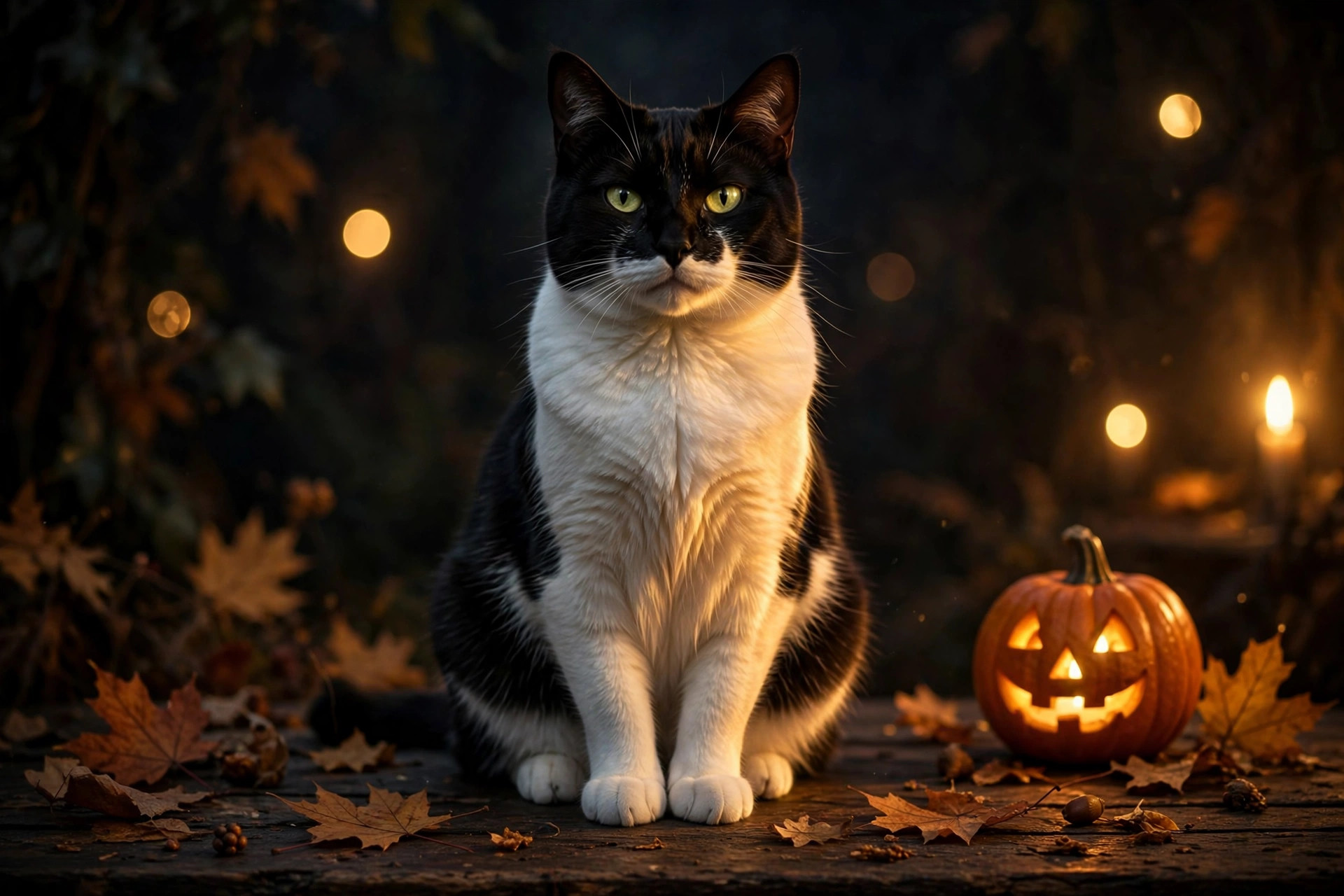
Biscuit wears black every day. A black jacket, white shirt front, white socks — the full formal outfit, as if he has somewhere important to be. He has somewhere important to be: everywhere. This is the month when humans become strangest about that jacket. Porch decorations appear. Stories get told. And somewhere, someone decides that the colour of a cat's coat is a moral statement.
It is not. But the story of why people think it is — and what the evidence actually says, and what a Spanish city council did about it last October — is worth one careful evening of your attention. Royalty insists on precision when discussing curses.
The costume is older than the cat
The association of black cats with bad luck is not a Halloween invention. It is a medieval European inheritance. In the centuries when witch trials swept across Europe, cats — especially black ones — were folded into the folklore as witches' "familiars": supernatural companions, or in the wilder telling, witches transformed. Fear did the rest. A black cat crossing your path became an omen, and the omen stuck to the animal like burrs.
The important thing is what happened next. The belief travelled; it did not stay consistent. In Britain and Japan, the same encounter — a black cat crossing your path — is widely considered good luck. English folklore held that giving a black cat to a bride brought happiness to the marriage. In Scotland, a strange black cat turning up at your door was read as prosperity knocking. British sailors were glad to have a black cat aboard, believing it carried them safely home. A curse that reverses itself at a border was never a fact. It was a fashion.
The fashion, however, was measured. A 2022 survey of 2,000 American cat owners by ACANA Pet Food and OnePoll found that 41 per cent believed black cats bring good luck, 21 per cent believed they bring bad luck, 30 per cent believed they bring no luck at all, and 8 per cent were not sure. The country of the witch trial, centuries later, is mostly past it.
What the shelter data actually says
Here the Royal Desk insists on honesty, because the honest answer is more interesting than the legend.
The well-known story says black cats are adopted less. The ASPCA looked at the numbers — roughly 300,000 dogs and cats in a 2013 study — and found the story mostly dissolves on contact. Black cats made up 33 per cent of feline shelter intake, 31 per cent of feline adoptions, and 30 per cent of the cats left behind. In other words: the adoption figures track the intake figures. As Dr Emily Weiss, the ASPCA's Vice President of Shelter Research, explained, people were not rejecting black cats — there were simply more black cats in the building to begin with. The illusion is a counting problem, not a prejudice problem.
But — and this is why the Desk does not deal in slogans — the matter does not end there. A study of 7,983 cats through an urban Kentucky shelter in 2010–2011 found weak overall evidence for what researchers call "black cat bias," yet the pairwise comparison told a real story: black cats experienced the highest euthanasia and lowest adoption rates of any colour, while white cats had the lowest euthanasia and highest adoption. Controlling for breed and stray status did not erase the gap.
And Cats Protection, the British charity, launched its National Black Cat Day campaign back in 2011 precisely because its own data showed black and black-and-white cats taking, on average, seven days longer to find homes than other colours. (The campaign worked — years later, the charity reports those cats now spend less time in care.)
Then, in 2026, a peer-reviewed paper in Animals found a mechanism hiding in plain sight: when people judged shelter photographs, they rated black cats as less friendly, more aggressive, and less adoptable than other cats — despite there being no evidence that coat colour predicts behaviour. The authors suggest the problem is perceptual: black fur swallows the fine facial cues humans read for emotion, and uncertainty reads as risk. Your tuxedo cat is not cursed. He is low-contrast.
The October problem
Which brings us to the annual madness. Last October, the Spanish city of Terrassa — a city of nearly 230,000 near Barcelona — formally suspended black-cat adoptions from 6 October to 10 November. The council, acting with local animal-welfare groups, said the measure protected cats from being adopted as Halloween props or harmed in "macabre practices." The deputy mayor reported that adoption requests for black cats spiked each October.
It sounds protective. The evidence behind it is thin. Shelter Animals Count, the American shelter-data body, stated in a 2024 report that there is no reliable data supporting the claim that black cats are targeted for rituals around Halloween — a view it described as an urban myth. Becky Robinson, founder of Alley Cat Allies, has called the idea that black cats are abused around Halloween "pure myth." An Operation Kindness shelter in North Texas said in 2024 that black cats are not in more danger on Halloween than at any other time of year. Modern welfare policy has largely moved from outright October bans toward adopter screening and education — keeping the standards high all year instead of the doors closed for one month.
The Desk's position: suspicion of every stranger in October is superstition wearing a high-vis vest. Rigorous adoption screening in every month is actual protection.
The royal survival guide for Halloween night
Halloween falls on Saturday, 31 October this year, and the real dangers of the night have nothing to do with witches. They have everything to do with ordinary household hazards, and the welfare charities' guidance is refreshingly unanimous:
1. Keep the cat away from the door. Constant knocking, the bell, strangers in masks — the ASPCA advises keeping cats in a quiet room during peak trick-or-treating hours. A frightened cat can slip through an opening door in a second. Biscuit supervises visitors from the upstairs window. It is the correct rank for the occasion.
2. No costumes on the cat. The Irish SPCA advises owners against dressing pets in outfits: it stresses them and restricts their natural behaviour. A festive bandana or collar is the compromise the staff accepts. Biscuit, who already dresses for dinner every day of the year, considers the matter settled.
3. The candy is yours, not his. Chocolate contains theobromine, toxic to cats; many sweets contain xylitol, which is dangerous too; and foil wrappers can cause gut blockages that need surgery. Keep the bowl on a high shelf, and brief the small humans: no sharing the loot.
4. Mind the set dressing. Candles are burns and fires waiting to happen; electrical cords invite chewing; fake cobwebs and small decorations become choking or swallowing hazards for a curious cat. Decorate like someone with a toddler and a tail is loose in the house — because someone with a tail is.
5. Pumpkin is fine; rotting pumpkin is not. Plain pumpkin flesh is not toxic to cats, but too much upsets the stomach, and a carved pumpkin left to rot can harbour dangerous bacteria. Admire it, then retire it.
6. Check the chip. Before the season, make sure the microchip details and the collar tag are current — the one piece of armour that works after an escape.
The better ritual
If October wants a ritual, it already has a good one. National Black Cat Day falls this year on Tuesday, 27 October — created by Cats Protection in 2011 specifically to celebrate monochrome moggies and undo the year's accumulated nonsense in a single day. The hashtags do the rest. Adopt, donate, or simply photograph your black cat in the light he deserves — low-contrast animals photograph beautifully in sunlight, which is half the battle this article has been describing.
The Tyrant's Verdict
Biscuit has heard the curse story. He heard it while wearing the alleged curse as a dinner jacket, which he wears to breakfast too, and to naps, and to the solemn business of sitting on warm laundry. He finds the concept of an unlucky jacket preposterous. He is right.
The evidence says there was never a curse — there was a medieval fear, a counting illusion in the shelter statistics, a small but real gap in how quickly black cats find homes, and a genuine problem with how black faces photograph. None of that is magic. All of it is fixable, and some of it — the seven days, the perception, the October panic — is already being fixed, by data, by campaigns, and by people who adopted the black cat anyway.
This Tuesday, 27 October, the Desk issues a single decree: if you have ever wanted a black cat, this is the week. The jacket is formal. The luck is yours to define. And the only curse in this house is the one Biscuit places on anyone who moves his armchair.
The royal decree, in short
- The black-cat curse is a medieval European inheritance — witches' familiars and omens — but it reverses at borders: in Britain and Japan the black cat is good luck (sailors, brides, prosperity).
- The ASPCA's 2013 study of ~300,000 shelter animals showed adoption figures tracking intake figures (33% intake black, 31% adoptions black) — the "less adopted" story is largely a counting illusion, per Dr Emily Weiss.
- But the gap is not zero: a 7,983-cat Kentucky study found black cats with the highest euthanasia and lowest adoption vs white cats, and Cats Protection's 2011 data showed black cats waiting seven days longer.
- A 2026 paper in Animals found the mechanism: people rate black cats less friendly and less adoptable from photographs — black fur swallows facial cues. Not a curse; a contrast problem.
- Terrassa, Spain (Oct 2025) suspended black-cat adoptions until 10 November over ritual fears — but Shelter Animals Count (2024) says there is no reliable data black cats are targeted at Halloween; modern policy favours screening and education instead.
- Halloween safety (Sat 31 Oct): cat away from the door, no costumes (bandana instead), chocolate/theobromine and xylitol out of reach, candles/cords/cobwebs secured, plain pumpkin fine but rotting pumpkin dangerous, chip and collar current.
- The better ritual: National Black Cat Day, Tuesday 27 October — adopt, donate, or photograph your monochrome moggy in good light.
Sources & further reading
- Cats Protection — National Black Cat Day (created 2011; 7-day adoption gap): cats.org.uk
- MDPI Animals (2026) — "Do Black Cats Look Less Adoptable? Human Judgments of Emotions and Adoptability in Online Shelter Photographs": mdpi.com
- MDPI Animals — "Coat Color and Cat Outcomes in an Urban U.S. Shelter" (7,983 cats, 2010–2011): mdpi.com
- National Today — ASPCA 2013 intake/adoption figures (~300,000 animals): nationaltoday.com
- Dexerto — Terrassa ban (Oct 2025) & Shelter Animals Count 2024 "urban myth" finding: dexerto.com
- USA Today / Beacon Journal — Alley Cat Allies "pure myth" & ACANA/OnePoll 2022 survey: beaconjournal.com
- ISPCA — "Safety Tips for our Pets this Halloween" (costumes, sweets, hazards): ispca.ie
Keep reading the Desk
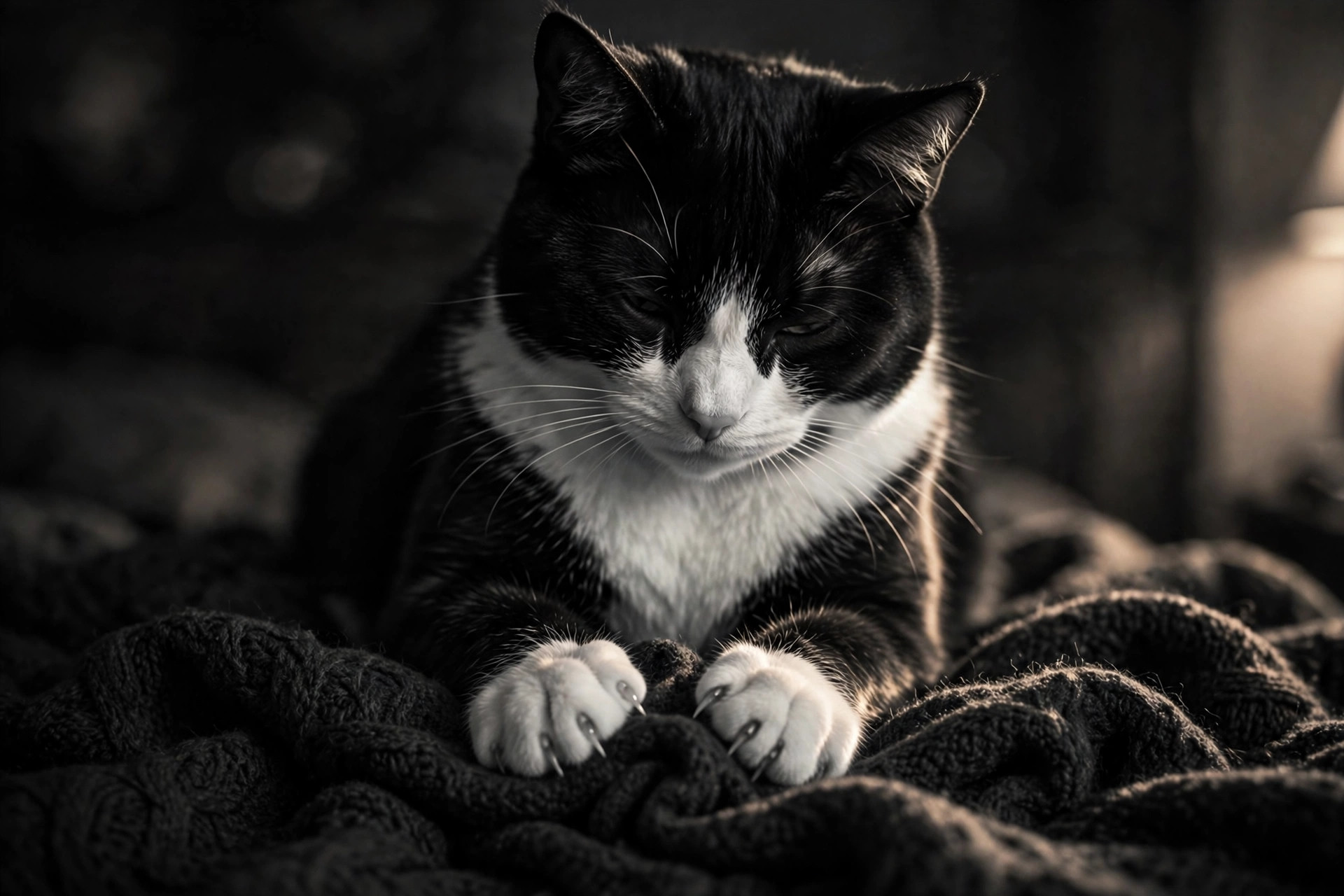
The Royal Bakery: The Science of Why Cats Knead
Biscuit makes biscuits on the good armchair every evening. The real story of kneading — milk treading, paw-pad scent signatures, wild grass nests, and how to read your cat's paws.
Read the story →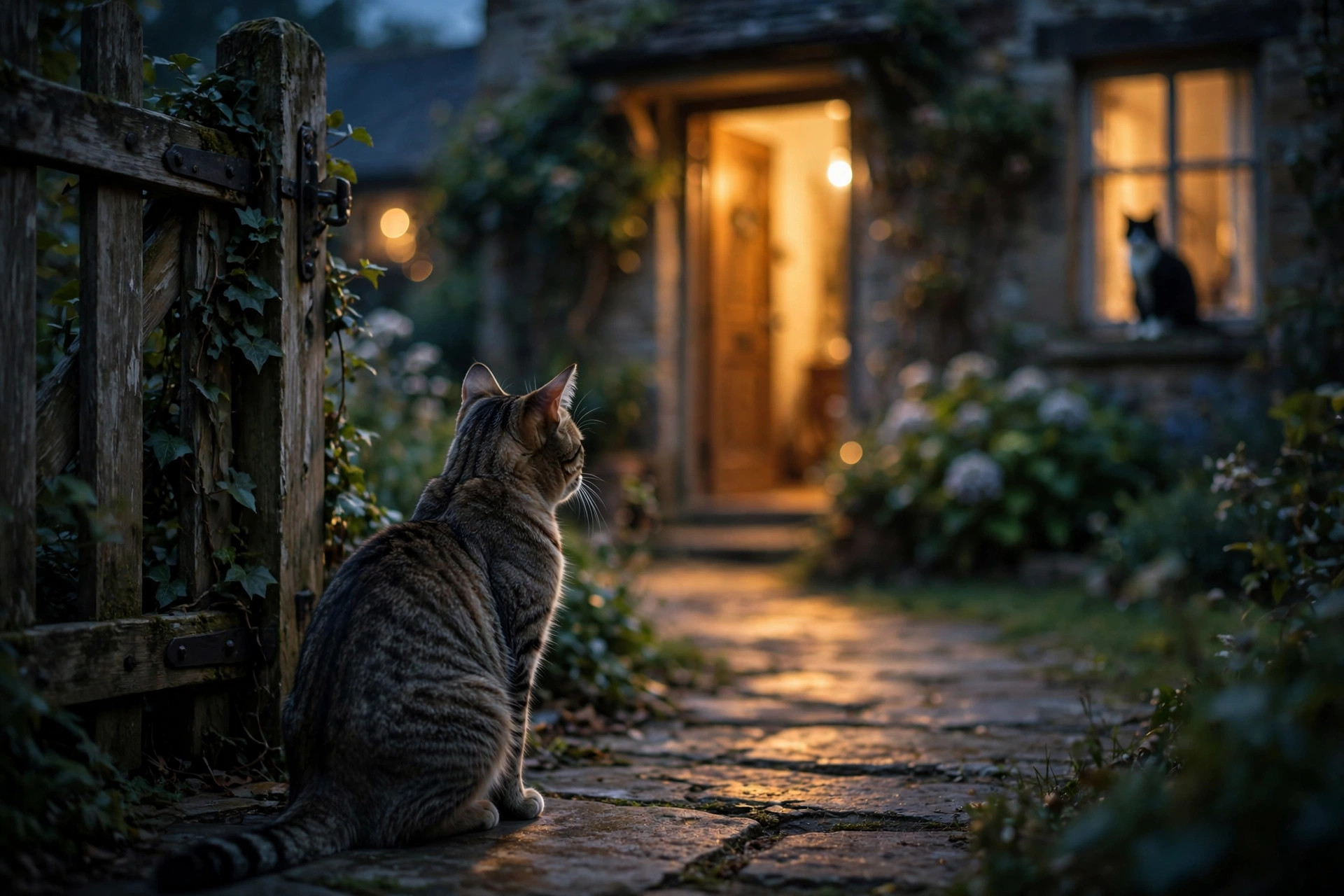
The Cat on the Doorstep: What to Do When a Stray Chooses You
National Feral Cat Day is this Friday, 16 October. A lean cat has started appearing at your gate — how to read it, feed it, vet it, and decide what comes next, with the science of TNR and the kitten socialisation clock.
Read the story →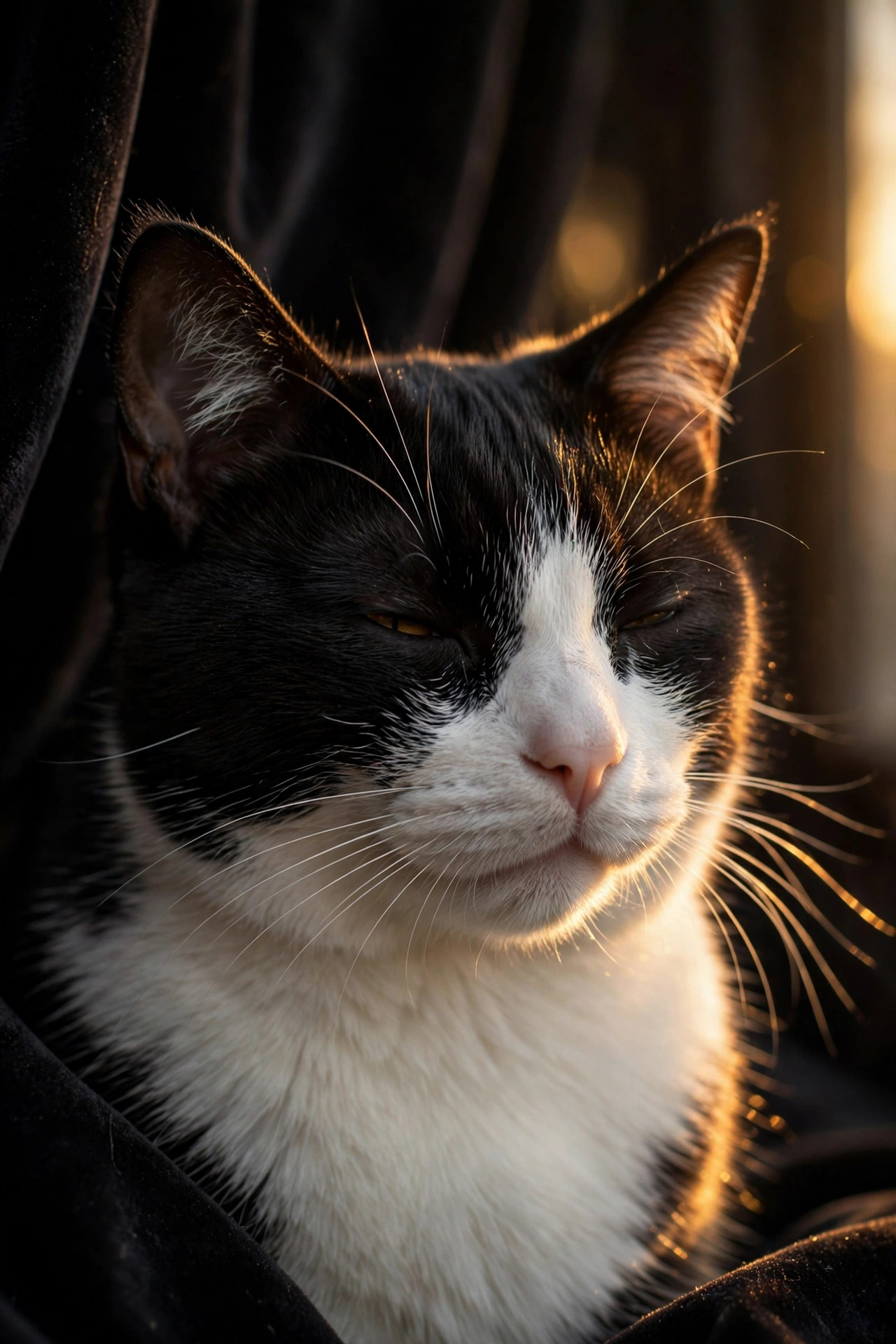
The Slow Blink: The Science Behind Your Cat's "I Love You"
Scientists at Sussex and Portsmouth proved the slow blink is real communication — two experiments, one shelter study, and how to blink back like royalty.
Read the story →